The Blog Market

  • Home
  • About
  • Resources Directory
  • Advertise With The Blog Market
  • Contact Us

Weekly Resources

February 27, 2015 by jennifer Leave a Comment

And again, it’s the end of another month! Crazy times. I’m looking forward to March so much for more reasons than I can count on my two hands. Something about springtime sparks the best kind of creative motivation (even if there are still rainy days here and there). Are you guys feeling it yet?

Resources for Bloggers & Creatives | The Blog Market

(top left, clockwise)

1. As always, I’m loving Jess’ writing workshop series on her blog June Letters. In this post, Robin Reetz addresses what I think is one of the hardest thing in the creative world: promoting your work without feeling uncomfortable. So good! I’m reading this one a couple times.

2. Tax season is among us! If you haven’t done your taxes yet, Mike of The Fresh Exchange wrote a sweet guide to tax season for entrepreneurs.

3. Nesha wrote the best list of ways to make your brand more personal. Especially in the online world, I think it’s easy to get systematic in what we share and how we talk.

4. And lastly, here’s a great post by Kory on how to deal with feeling overwhelmed. Real talk – I keep 20 tabs open at once and can’t write lists with less than 10 items on them. I love Kory’s advice to start by doing just one thing. Really need to keep this in mind!

Well, I hope this month has been good to you! Flowers and sunnier days are comin’. Have a good weekend. 🙂

Leave a Comment

How to use Hex Color Codes

February 25, 2015 by jennifer Leave a Comment

Changing colors of web elements is usually one of the very first things learned in HTML and CSS. Maybe you are like me and first discovered hex codes while trying to beautify your Neopets shop (what up ’90s kids!). Over the years, the language of code has changed a lot but the process of choosing and changing colors has remained pretty consistent.

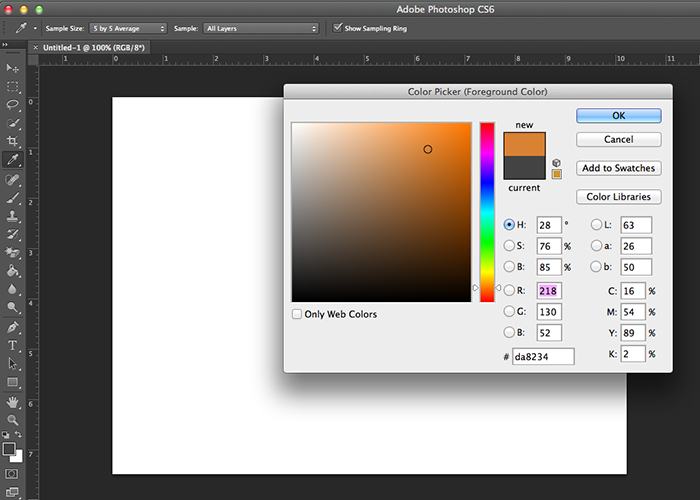
When changing colors in HTML and CSS, we use hexadecimal numbers – more commonly known as “hex color codes”. To be honest, I never think about what these color codes actually mean. I just use the color picker in Photoshop or I use the Inspect Element tool. Still, it’s neat to think about so here’s a brief rundown on how this whole color thing works.

How to use Hex Color Codes | The Blog Market

A hex code is made up of a hashtag followed by 6 digits (0-9, A-F). Together, the letters and numbers represent different combinations of red, green, and blue light (RGB). Zero represents the lack of color or light (#000000 would give you black) while the letter “F” represents the strength of a color or light (#FFFFFF would give you white). All of the numbers and letters in between “0” and “F” represent a spectrum of colors and can be combined to create beautiful custom shades. For a more extensive tutorial on how color codes technically work, click here.

When inserting colors into your CSS codes (click here for a CSS refresher), you definitely can just type the name of a common color. For example, adding “color: pink;” to your font selector would create text like this. However, I know that you probably want to be able to choose the exact hue for your test. Why not create something custom just for your blog or website? This is where some kind of color choosing tool comes in handy. For the most basic color picker, an excellent simple website is ColorPicker.com.

colors_01

Or you could just use the color picker in Photoshop!

colors_02

After you’ve chosen the perfect colors, you can copy and paste them into your CSS style sheet. Want to change your font color? Check out our tutorial on styling fonts with CSS.

For some other great ways to explore hex colors, check out our roundup of 5 color palette tools. Have fun!

Leave a Comment

When to Skip the Monthly Blog Calendar

February 23, 2015 by jennifer Leave a Comment

Content calendars. Editorial calendars. Blog calendars. Whatever you want to call it, this planning for 30 days of blog posts is a favorite way to organize a website’s content. Before digital publishing was a thing the only thing, editors ran on a publishing schedule. Each story must be prepared within a certain time frame in order for it to be ready for print. As a digital media editor it makes sense to me that we, in online publishing, would at least try to work in a similar way. It’s just good organization. But just because basically every blogger under the sun is championing a calendar these days doesn’t exactly mean it’ll work for you. I write based off of a calendar for basically every blog except my own. It’s extremely valuable for those commitments, but when it comes to IFM, I can’t seem to stick to a schedule.

Do you need a blog calendar for your blog?

Last December when I was kicking off a redesign and shifting direction from DIY to more of a sustainable lifestyle blog, I was full of ideas. So naturally, I decided to plan out the next three months of my life. Little did I realize I’d be getting Google notifications on my phone five days a week (for some reason I kept them turned on too). We all know I haven’t been blogging that often (see this post), so needless to say these little reminders are nothing but daily doses of guilt for all the tasks I’m not completing. Yeahhhh. It got me thinking that perhaps next month I shouldn’t continue this way. A calendar just doesn’t work for everyone all the time. If you’re one of these type of bloggers, you may way to skip out on it too.

Your posting schedule fluctuates

If you don’t know what you’ll be blogging about tomorrow, best not to try to figure out a whole month, even if it seems everyone is telling you that’s what you need to grow your blog and gain a following. In my opinion, this just ends up being wasted time. If you’re not on a strictly MWF or M-F schedule or whatever, it probably isn’t worth it.

You’re not exactly sure of your blog’s direction

If your blog is new or changing, it may actually be best just to test the waters for a bit. I’ve switched focus quite a few times and I find that while a brainstorm is totally necessary, there’s no reason to finalize it all before I know how it will go.

Your blog is entirely personal

If you rely on family outings, travel, or personal musings for the majority of your content, planning a calendar for any amount of time will likely require Planning. Your. Life. Sure you can plan for certain categories and you definitely want to plan for things like brand partnerships and guest posts, but overall, if you’re not into it, you don’t need a calendar for this type of blog.

You rely on breaking news

If you base your content off of current events, news stories, trends, pop culture, etc. etc., you need to leave a little wiggle room for things that just come up. If you do choose to make a calendar, it’s important to at least leave open spaces or room for movement in order to provide the best stories in a timely way.

You tend to over plan

This is where my story comes in and why I don’t think I should worry about a calendar for my blog next month. Last time, I over planned and under delivered. I couldn’t keep up with the schedule, I kept second guessing ideas I’d had a few months back, and I ended up planning and re-planning several times. If you tend to plan everything to the point where it becomes slightly excessive, care to join me in my no-planning month? It will be a challenge, but instead we can start drafting our blog posts when we dream them up, instead of going through the whole over planning process. (Side note: don’t get me wrong, if you don’t go overboard, planning helps create a better blog.)  I think it will lead to more productive blogging!

If it’s more overwhelming than it is helpful

Writing out a blog calendar is a lot of work. For some of us it’s a life saver and for others it’s just another thing to worry about. In essence, when something that’s supposed to be helpful turns out to be stress inducing, stop right there!

Have you been seeing all the calendar advice around blogland lately? What’s your take? Let me know if you’ll be joining me on a calendar-less month in March!

Leave a Comment

Weekly Resources

February 20, 2015 by jennifer Leave a Comment

Good morning! We’re finding so many great blog advice posts lately. I’ve always been a big fan of lists. I love when creatives share actual “steps” we can take to reach certain goals, rather than just fluffy jargon. Okay, maybe I like the fluffy jargon too.

Resources for Bloggers & Creatives | The Blog Market

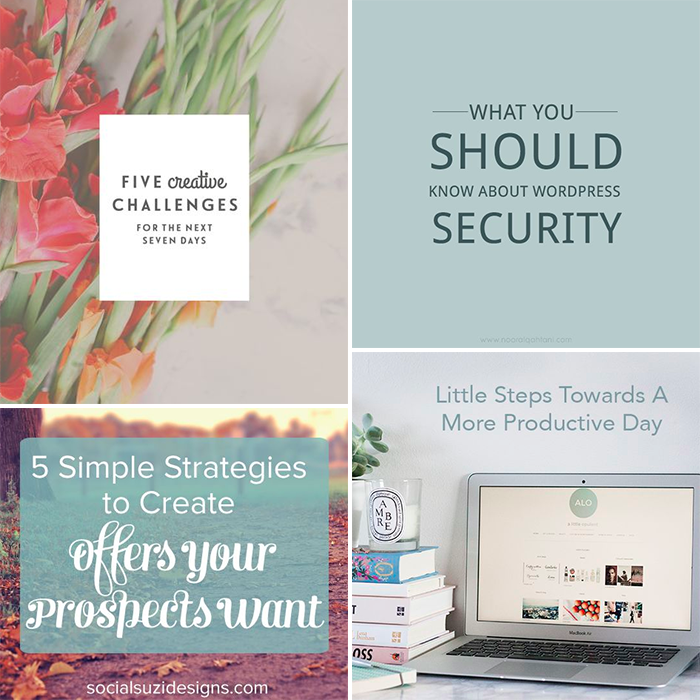
(top left, clockwise)

1. Jen’s list of 5 creative challenges for the next seven days is perfect for anyone who is in a creative rut or just needs to mix things up a little. I love her challenge to “make time for your passion project”. Crafting for fun is something I have been trying to remember to do. 🙂

2. With all the creepy hackers out there, it’s definitely important to know how to keep your website secure. Noor wrote an amazing post on what you should know about WordPress security. Lots of helpful tips!

3. Rebecca of From Roses posted a wonderfully simple list of little steps toward a more productive day. Focusing on a single task at a time is something I never do but really want to get good at!

4. We’re obsessed with Suzi’s blog post of 5 simple strategies to create offers your prospects want. There are so many bloggers, blog readers, and blog topics floating around the web. Knowing how to truly connect with your audience through meaningful content is key.

Enjoy reading these posts! I know you will.

Happy weekend. 🙂

Leave a Comment

Should You Open an Etsy Shop?

February 17, 2015 by jennifer Leave a Comment

Goodness. February is flying by. I feel like it needs to slow down so I can have a second to think! I’ve posted on photography resources + writing product descriptions, but it’s the new year and not everyone is to that point yet. Selling your products online can be fun and laidback, but if you want to take it seriously and make a profit, there’s a lot to know. Hopefully this series helps!

I haven’t been selling handmade or vintage for over a month now, but I definitely haven’t stopped being a buyer on Etsy. It’s made me think that everyone who wants to open a shop should be a buyer at some point too. (Believe it or not, that’s not the case.) But having an online biz has just as much to do with the customer as if you owned a b&m shop, so it’s always good to get that perspective! Selling your product online is only possible because of such a strong community of likeminded individuals. Especially with a small biz, shoppers are making a conscious effort to choose you over the department store down the street, even though you may cost more. (This community is a big reason we created the forums. If you have any business topics you want to bring up, post them there to start the discussion!)

Should you open an Etsy shop? // Small business tips

Anyway! One of the most common questions you’ll hear when considering selling is “is there a market for your product?”. Honestly, when it comes to Etsy, I skip this question. If Etsy has taught me anything it’s that if you can make it, you can make a market for it. You do have to put in the work to find your audience, but once that’s done, it will sell. People go to Etsy to find things that aren’t sold everywhere else, so it’s not necessarily that you need to think about the latest trend. That said, Etsy is a different world than it was a few years ago and competition is higher than ever. I think there are two main ways to be successful (though all rules can be broken): make something everyone wants—like a trending item—or make something no one has, yet. With the latter, you won’t exactly know there’s a market but you’ll definitely find out!

Okay, so say you have this product. How do you know if you’re ready to create a whole business around it, specifically Etsy? Well, do you want to make it? Serious question. Do you want to make this one time or 100 times? I think we’ve all had the thought or at least heard other people (especially when talking about Pinterest, eeek) say “I could make that”. Sure, you could buy the materials and develop the skill to make a lot of things on Etsy. But do you want to? Do you really want to put in the time to do that? That’s the difference between someone who will make money on Etsy and someone who is better off buying ready-made products.

Have you done market research? You may not exactly know of the market yet, but have you at least investigated? Search your items. Are other people making it (or sourcing it, if supplies or vintage) and what are they doing? How are you similar and different? What kinds of marketing strategies will you need to employ to get this off the ground? Because if you haven’t at least looked into it, you’re in for a rude awakening when you finally do!

The next thing to consider is time. I’m all for people spending just a few hours a week on their shops and having a low-key, part-time income. But you at least need to do the legwork—if you don’t have photography skills, you need to learn them. If you don’t know how pricing works, you have to research. Etc. Etc.

I believe that if you want to do something you’ll make time. Hardly anyone just says they have the time. So the real question is whether you want to make time. If you have a product you’re passionate about and willing to take the time to not only market and sell, but continually improve, then go for it. It’s a teensy investment with a huge potential.

Don’t have a product? Send this post to that crafty friend of yours who is always making things! You never know, it could fuel their next career move! And be sure to head over to the forum for more chats like this.

Leave a Comment

  • Newer Posts
  • 1
  • …
  • 90
  • 91
  • 92
  • 93
  • 94
  • …
  • 99
  • Older Posts

Recent Posts

  • Easy Ways to Add Greenery to Your Workspace
  • How to use Pinterest board sections to get organized + stay inspired
  • Friday Favorites 05 | Terrazzo Trend
  • Best Creative Planners for 2020
  • 10 Journal Prompts for Creative Motivation

Recent Comments

    © 2018 The Blog Market · · BACK TO THE TOP